"Perspectives for Sustainable Production and Sales." There are prospects, because shellfish are healthy food and farming is good for nature. On the other hand, there are current problems with both production and sales. The mussel harvest in the Netherlands is declining. Scarcity is partly being met by imports, but elsewhere in Europe, production is also under pressure. What are the causes, remedies, and prospects? How is this being addressed elsewhere in Europe, and especially how to address the various consumer categories?
THURSDAY, JANUARY 22, ON "SALES"
• What drives mussel and oyster consumers?
• What are the trends in consumer behavior, and how is young consumers being reached?
• Does the supply of shellfish match demand?
• How could shellfish attract more attention in supermarkets?
This program session is being realized in collaboration with the SeaNext project. This project, led by the Netherlands Fish Bureau, aims to improve information about seafood, raise awareness of its role in a sustainable, healthy, and protein-rich diet, and increase seafood accessibility in the consumption patterns of younger generations in particular. The SeaNext project is co-financed by the European Union.
PROGRAM:
8.30 Registration, trade fair open
9.15 Opening of the conference by Zeeland Provincial Executive Member Jo-Annes de Bat
9.30 Opportunities for shellfish farming and consumption in Europe (via video) by European Commissioner Fisheries and Oceans Costas Kadis, introduction by Addy Risseeuw
Session I SeaNext: shellfish as perceived by the young consumer
09.45 What is SeaNext? - Lisa Koopman, Visbureau, SeaNext project
09.40 Introduction by session chair Addy Risseeuw, PO Mossel
09.55 What motivates the young consumer? – Talisa Ong, The Forward Club
10.30 Coffee break, trade fair, posters
Session II SeaNext: casestudies
11.20 Introduction by session chair Lisa Koopman, SeaNext
11.25 Shellfish at schools - Pim van Engelenburg, catering and promotion and Jeroen Schuurmans Kon. Willem I college and Sil van Elk, student
11.35 Introducing teenagers to seafood: an example from the United Kingdom - Eleanor Adamson, Fishmongers UK
11.55 Belgian taste for shellfish: insights, challenges and opportunities - Donaat Mortelmans - VLAM/COLRUYT
12.20 Lunch break, trade fair, posters
Sessie III SEANEXT: The link between supply and demand
14.15 Introduction by session chair Wouter van Zandbrink, association of shellfish traders
14.20 The blue food opportunity - Camiel Derichs, MSC
14.40 Supermarket shelf of the future - Bart Fischer, retail expert
15.00 How to reach the consumer? Panel discussion, Lisa Koopman moderator
16.00 Tea break, trade fair, posters
16.30 New Years reception of the Producer Organisation of the Dutch Mussel Cultivation and the Dutch Mussel Auction
19.00 Conference dinner in De Babbelaar
FRIDAY MORNING, JANUARY 23, ON "SUSTAINABLE PRODUCTION"
• What are the current prospects?
• Is there sufficient space?
• What are the trends in shellfish farming?
• What are the prospects for combining with other sectors, such as recreation?
These questions are at stake on Friday morning. The session will focus on trends in shellfish farming, as well as the prospects for combining with other sectors, such as recreation. The results of an international workshop on this added value, held on the Wednesday preceding the conference, will also be presented.
FRIDAY AFTERNOON: "FURTHER PERSPECTIVES"
• What do young people see in the sector?
• How do they approach mussel and oyster farming?
• Which innovations are appealing?
Ideas and experiences will be discussed in a panel discussion with young shellfish farmers and the audience
There is growing interest among women to take on important positions in the shellfish industry. Experiences at home and abroad will be shared. Sarah Holmyard, director of UK women in seafood, will explain the situation in the UK.
PROGRAM:
8.30 Registration, trade fair open
Session IV: Perspectives of Farming
9.00 Introduction by session chair – Harm Kampen POMossel
09.05 Innovative mussel farming in the Westerschelde estuary – Eva Hartog HZ - UAS
9.25 Mysterious mussel and lobster mortality in the Oosterschelde- Jildou Schotanus, WMR
9.45 New Natura2000 goals: risks and resolutions - Werner Lindhout en Megan Claessen, LGL legal
10.10 Coffeebreak, trade fair, posters
Session V: More with farming
11.00 Introduction of the session and report of the preconference workshop on adding value to farming - Jasper van Houcke, HZ UAS
11.10 New value chains for mussels through new products and environmental benefits in the Baltic – Maya Miltell, submariner, Germany
11.30 The effects of mussel cultivation on the biodiversity of mobile fauna in the western Wadden sea – Lotte Bouwman WMR
11.50 Oyster restoration for nature and nutrition - Stefano Carboni, NORA president, Italie
12.20 Lunch break, trade fair, posters
Session VI: Farming in practice
14.10 Introduction by session chair Marloes Kraan, WUR, DCC
14.15 Oyster farming by the new generation - Adriaan Cornelisse, ACE
14.30 Panel discussion with young shellfish farmers Lambrecht Nieuwenhuize, Daniel Riedijk and Adriaan Cornelisse
14.55 The role of female co-workers in the shellfish industry - Sarah Holmyard, director UK females in seafood
15.15 Panel discussion with Merel Seinen (Meromar), Jolanda Smal-van Damme (Oesterij) and Ida Sinke (KOTRA, OWV fishermen) on experiences of women in the shellfish industry
15.40 Interactive closure of the conference, NathalieSteins, WMR
16.15 Farewell drinks
POSTERS
Results of recent research and various innovations will be presented in an interactive poster session during lunch.
TRADE FAIR
The first registrations have been received: approximately 25 exhibitors have already confirmed and will be announced on our website soon. There is room for new exhibitors.
As in previous years, this edition is open to everyone. Thanks to the central location in Goes, we also expect an even larger turnout than in previous years.
NEW YEAR'S RECEPTION
Starting at 4:30 PM on Thursday, January 22nd, the Producer Organization for the Dutch Mussel Culture, in collaboration with the Dutch Mussel Auction, will host a New Year's Reception. All participants are invited. Please register under "order tickets".
CONFERENCE DINNER
The traditional conference dinner will be held on Thursday at 7:00 PM in De Babbelaar, the exhibition hall of the conference.


After earning a master's degree in public administration from Erasmus University Rotterdam, De Bat served as director of the CDA Board Members' Association in The Hague. From 2006 to 2010, De Bat was a council member and from 2010 to 2015 an alderman in Goes. He has been a member of the Provincial Executive of Zeeland since 2015.
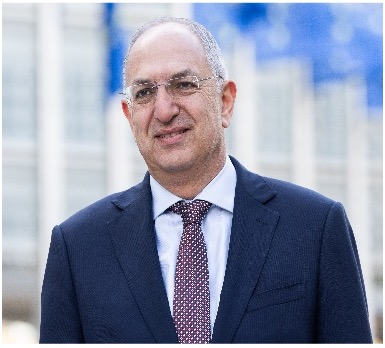
Commissioner Costas Kadis leads the EU’s Fisheries and Oceans policy, focusing on implementing a long-term vision for a resilient, competitive, and sustainable European fisheries and aquaculture sector to secure Europe’s food sovereignty. He is also responsible for the EU’s efforts to restore ocean health, ensure maritime security, support European coastal communities, and foster the blue economy.A Professor of Biodiversity Conservation at Frederick University in Cyprus, Commissioner Kadis has held several ministerial portfolios for the Republic of Cyprus, including Health; Education and Culture; Agriculture, Rural Development, and Environment. In the context of the UN-led Cyprus’ reunification talks, he also led the Greek Cypriot Technical Committee on Environment.Born in Nicosia, he graduated from the University of Athens with a degree in Biology and a PhD in Conservation Biology.
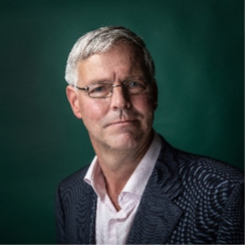
Addy Risseeuw is a Wageningen agriculturalist and business economist at Nijenrode. He has always worked for entrepreneurs in the agricultural, food, and (Shell)fish sectors.
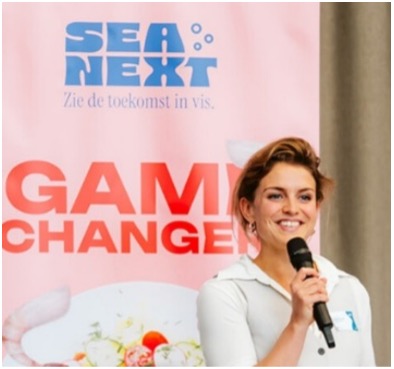
Lisa Koopman, manager at the Netherlands Fish Marketing Board. Driven by my personal mission to give seafood a more prominent role in our food system, I work daily to strengthen the image and accessibility of fish, shellfish, and crustaceans. My passion for this was born in Yerseke, when I saw firsthand how mussels are farmed sustainably. As one of the founders of Het MosselNet, an organization that aims to inspire young people to enjoy mussels, I organize pop-up dinners and events.
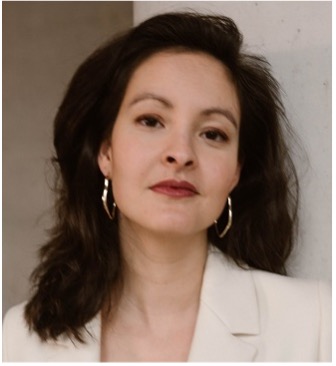
I'm Talisa Ong, founder of The Forward Club, the strategy agency for the future. I'm trained as a trend researcher and work on the future daily. Over the past 10 years, I've worked on strategy and innovation for a wide range of organizations, from government ministries to corporates and from media to construction. For SeaNext, we delved into the experiences of young people and the role seafood can play in that future.
Lisa Koopman, manager at the Netherlands Fish Marketing Board. Driven by my personal mission to give seafood a more prominent role in our food system, I work daily to strengthen the image and accessibility of fish, shellfish, and crustaceans. My passion for this was born in Yerseke, when I saw firsthand how mussels are farmed sustainably. As one of the founders of Het MosselNet, an organization that aims to inspire young people to enjoy mussels, I organize pop-up dinners and events.
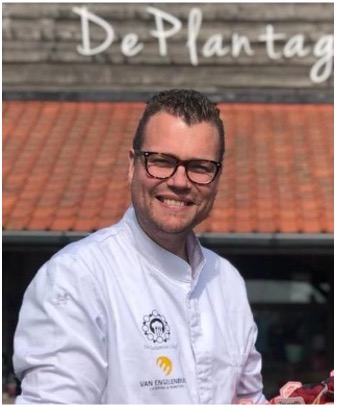
Pim van Engelenburg is a culinary entrepreneur active in the shellfish industry. He provides promotions and cooking demonstrations at trade fairs, for hospitality wholesalers, and during tastings and workshops. He also gives guest lectures at hotel and culinary schools throughout the Netherlands, where he shares his practical experience and passion for shellfish with the next generation of chefs.
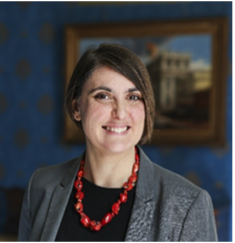
Biography (longer alternative): Eleanor works for The Fishmongers’ Company and its Fisheries Charitable Trust, London, where she manages a portfolio of science, policy and education related programmes and grants that support marine and freshwater conservation, fisheries, aquaculture, and seafood trading in the UK. She chairs the Fisheries All-Party Parliamentary Group Expert Advisory Panel, sits on the External Advisory Board of the Centre of Research excellence in Intelligent and Sustainable Productive Systems (University of Plymouth), judges the Marine Stewardship Council’s UK Awards, and is a Scientific Associate of the Natural History Museum. As a scientist she worked previously in fisheries research in Australia, Asia and Europe and continues to be active in fisheries and aquaculture discussions internationally.
Abstract: The ‘Fish in School Hero’ programme in the UK aims to give every child the chance to cook, eat and enjoy seafood before they leave school. The programme has been running for six years and now reaches into a quarter of UK High Schools. This talk will explain how the programme works, in collaboration with seafood producers, teachers and philanthropic support, touching on the model’s success and challenges, with a focus on the farmed shellfish sector.
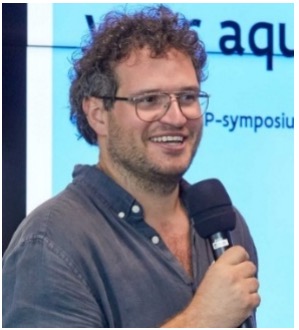
Donaat Mortelmans, MSc, graduated as a bioengineer in environmental technology with a master's degree in aquaculture. He began his career at Trevi NV, working on aquaculture projects and water treatment. Since 2021, he has worked at Colruyt Group as an aquaculture & fisheries officer, focusing on projects such as the sea farm and collaborations with the Belgian fishing industry. Outside of work, Donaat is a passionate diving instructor and underwater photographer.